
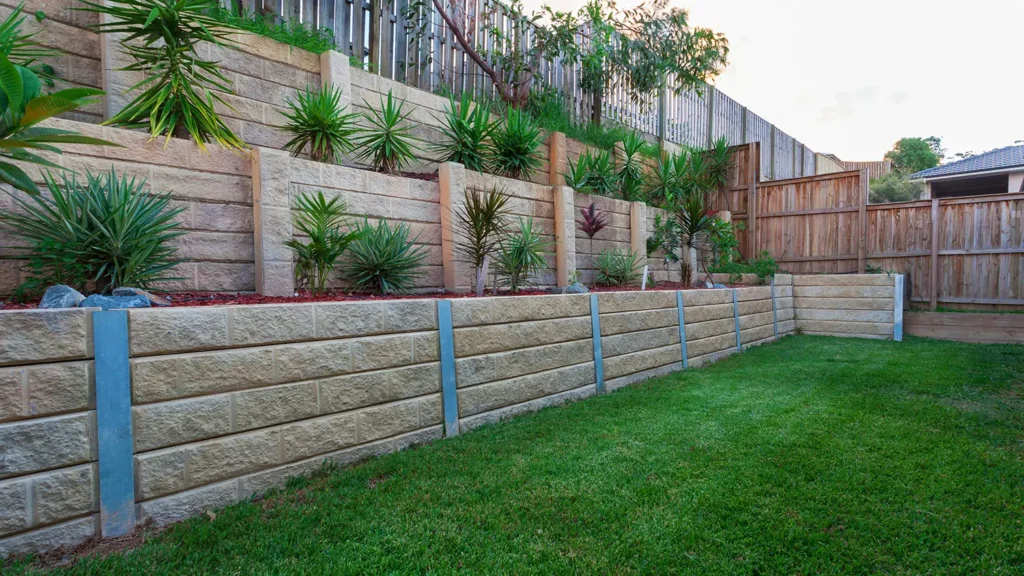
Installing Utah retaining walls is a great way to reshape a sloped yard and keep soil where it belongs, but a wall is only part of effective retaining wall erosion control and spring runoff landscaping. If melting snow causes water to wash through your garden beds or pool near your patio, your first step is figuring out where that water comes from and how to guide it safely across your yard.
Fall is the perfect time to track how runoff moves before winter snow covers everything. Taking stock of these problem areas now lets you design a reliable yard drainage retaining wall system well ahead of the spring thaw.
Why Fall Helps Reveal Problem Areas and Erosion Patterns
Take a walk around your yard after autumn rains to check high-risk spots. Look for runoff paths carved into the dirt, exposed plant or tree roots, washed-up sediment on your driveway, or mulch that has collected at the bottom of slopes.
Pay attention to how water acts in different areas. A steep bank without plant cover loses soil for very different reasons than a garden bed overflowing from a misdirected downspout.
Snapping photos and taking brief notes in the fall gives landscaping pros clear insight into your yard’s spring runoff patterns. These details help determine whether you need a retaining wall for slope stabilization or a broader set of drainage solutions.
Understand Terracing, Soil Retention, and Drainage Behind Walls
A retaining wall built for sloped terrain holds back soil pressure right where the ground changes level. By terracing steep slopes, you break up long stretches of exposed dirt, prevent topsoil washout, and create usable space for residential gardens or walkways.
Keep in mind that walls alone won’t make heavy water flow disappear. You need solid retaining wall drainage—including gravel backfill, perforated drain pipes, and weep holes—built right behind the structure to carry subsurface moisture safely away.
Without a proper way out, trapped snowmelt builds hydrostatic pressure behind the wall, which can cause cracking, bulging, or total wall failure over time.
Proper Engineering and Construction Considerations
Trapped water adds immense weight against a wall. Designing a lasting structure means looking at your specific soil type, expected loads, overall height, and backfill materials alongside a complete drainage plan.
A few small drain outlets won’t handle Utah’s heavy snowmelt. A truly reliable setup uses layers of drainage gravel, landscape fabric, and dedicated discharge routes tailored to your property.
Taller walls, complex slopes, or builds near home foundations usually call for professional engineering and local permits. Be sure to check city building rules before digging begins.
Why a Wall Alone Doesn’t Fix Every Drainage Problem
Retaining walls are incredibly useful, but they can’t solve every site drainage issue on their own. Roof downspouts, runoff from neighboring yards, heavy clay soils, and paved surfaces all influence how water flows across your property.
A complete approach to spring runoff often pairs retaining walls with smart regrading, swales, catch basins, deep-rooted plants, or French drains to direct water smoothly.
If water pools near your foundation or threatens outdoor living spaces, get a professional evaluation right away. Just remember that drainage solutions should never send excess runoff onto neighboring properties.
Making Slopes Functional with Coordinated Hardscaping
Terraced walls turn unusable hillside slopes into functional tiers for patios, seating, steps, or garden beds, making your whole yard far more practical.
Creating these multi-level spaces takes thoughtful planning around outdoor stairs, irrigation routes, access paths, and drainage points so each level stays dry and easy to reach.
Whether you choose natural stone, concrete blocks, or timber, pick materials that match existing hardscaping while meeting structural strength needs.
Use Fall to Prepare a Better Project Brief
Note down where erosion regularly happens during heavy rain or spring thaws. Keep track of any existing walls that show leaning, cracking, or water pooling without worrying about diagnosing the exact cause yourself.
Collect past photos of snowmelt accumulation or storm runoff to share with your builder. Ask if full engineering plans or a phased project approach make the most sense for your goals.
Starting your planning in the fall leaves plenty of time for design work, permitting, and sourcing materials so your site is completely ready for build day as soon as warmer weather arrives.
Frequently Asked Questions
Can a retaining wall control erosion?
Yes, a retaining wall can effectively control erosion when designed in tandem with comprehensive site grading, vegetative cover, and adequate drainage systems.
Do retaining walls need drainage?
Absolutely. Without integrated drainage behind the wall to relieve hydrostatic pressure, water buildup can compromise structural integrity and lead to wall failure.
Can a wall help with spring snowmelt?
Yes, a retaining wall can direct and manage heavy spring snowmelt when integrated into a full landscape drainage strategy that routes runoff safely toward proper discharge outlets.
When should I address yard drainage problems?
Address drainage concerns as soon as erosion or water pooling becomes visible. Seek professional evaluation immediately if water threatens home foundations or existing structures.
Can a wall make a sloped yard more usable?
Yes, terracing a steep slope with retaining walls creates functional level terraces for patios, lawns, garden beds, and outdoor living spaces.
Plan for the Water as Well as the Wall
Request a consultation with Jones Outdoors to discuss your yard’s slope, drainage needs, and vision. A custom landscape design ensures your retaining wall and drainage system offer lasting protection and beauty.